





How Additive Manufacturing Solves the Obsolete Parts Problem with Reverse Engineering and Reprint
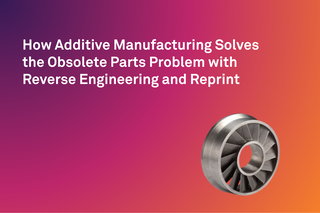
Obsolete parts can stop useful equipment long before the machine itself reaches the end of its life. In many manufacturing environments, the challenge begins when a critical component fails, and the original supplier no longer supports it, the tooling is unavailable, or the CAD Design is missing. Reordering the part may take too long, recreating tooling may not make sense for low volumes, and replacing the full system may be unnecessary. This is where Reverse engineering and Additive Manufacturing create a practical route forward. Reverse engineering helps recover the design from the physical part, while Additive Manufacturing makes it possible to produce the replacement through 3d printing without depending on traditional tooling.
This blog looks at how the reverse engineering process works, how it connects with Additive Manufacturing, and how obsolete parts can move from physical samples to digital models and reprint-ready components.
How Reverse Engineering Creates the Path for AM
Reverse engineering starts with the existing part and turns it into usable digital information. The part may be old, damaged, worn, or available only as a physical sample. Through 3D scanning, measurement, and CAD Design reconstruction, its geometry can be captured and rebuilt into a model that can be reviewed, corrected, and prepared for production.
This step is important because Additive Manufacturing needs accurate digital data before a part can be produced. A scan file alone may not be enough. The model may need correction for worn surfaces, missing features, assembly fitment, or manufacturing requirements. Once the design is ready, Additive Manufacturing can be used to produce the part without creating new moulds, dies, or dedicated tooling.
For obsolete parts, this creates a clear path from a physical component to an AM-ready file and then to a usable replacement.
Building the Digital File from the Original Part
Before an obsolete part can be reprinted, the physical component has to be converted into a usable engineering model. This stage takes the information locked inside the physical component and turns it into a clean CAD Design that can be checked, corrected, and prepared for Additive Manufacturing.
The process may include:
Part assessment: The component is reviewed for function, wear, damage, material, fitment, and operating conditions.
Geometry capture: 3D scanning is used to capture complex profiles, curves, and surface details, while manual measurement supports critical dimensions such as hole positions, wall thickness, mating faces, and datum references.
CAD Design reconstruction: The scan data is rebuilt as a clean, editable CAD Design with proper surfaces, features, and reference geometry. Worn edges, deformed areas, and missing sections are corrected based on engineering judgment.
Tolerance and interface review: The reconstructed model is checked around fitment zones, assembly clearances, mounting points, and functional surfaces. This reduces the risk of producing a part that looks correct but fails during installation or use.
AM-ready preparation: The final design is prepared for the selected Additive Manufacturing route by reviewing build orientation, support strategy, wall thickness, surface finish, and post-processing needs before reprint.
Choosing the Right Material Path for the Recreated Part
The right Additive Manufacturing route depends on the part’s function, material requirement, load condition, and end-use environment. Some obsolete parts may need the strength, heat resistance, or durability of metal AM, while others may be better suited for polymer AM, where speed, fitment, weight, or low-volume production is the priority.
Metal AM can be relevant for:
Metal Additive Manufacturing is suitable for parts that need mechanical strength, thermal resistance, or long-term functional performance. It can support industrial brackets, machine components, tooling inserts, aerospace and defense parts, heat-resistant components, load-bearing parts, and complex geometries where conventional machining may be difficult, expensive, or material-intensive.
Polymer AM can be relevant for:
Polymer 3d printing is useful for applications where the requirement is faster iteration, functional validation, lighter weight, or low-volume replacement. It can support housings, covers, jigs, fixtures, fitment trials, functional prototypes, and replacement parts where polymer material properties meet the operating requirements.
In many cases, metal and polymer AM can also work together in the same reverse engineering workflow. A polymer part may be used first for fitment checks or design validation, while the final production part may move to metal based on performance needs. This helps teams make better decisions before committing to the final reprint.
Reprint as a Digital Spare Strategy
Once an obsolete part is reverse-engineered, corrected, and validated, the work does not have to be repeated for every future requirement. The approved CAD Design can be stored as part of a digital spare parts library, along with the selected material, Additive Manufacturing process, post-processing steps, and inspection requirements.
When the part is needed again, it can be reprinted from the validated file instead of restarting the sourcing or design recovery process. This is useful for low-volume, high-value, or hard-to-source components where maintaining physical inventory may not be practical.
A digital spare strategy also helps reduce dependency on old suppliers, lost tooling, and long procurement cycles. It gives manufacturers a more controlled way to manage critical spares, especially for legacy systems that still need reliable operational support.
What to Check Before Reprinting a Part
Before a reverse-engineered part is approved for reprint, the focus should shift from geometry to performance. A part may match the original shape, but it still needs to meet the fit, material, load, and inspection requirements of the application.
Function and fitment: Check how the part works inside the assembly and identify the critical mating surfaces, mounting points, and clearances.
Load and operating conditions: Review the stress, movement, temperature, pressure, vibration, and wear conditions the part will face during use.
Material and process suitability: Choose the right metal or polymer Additive Manufacturing route based on strength, durability, surface finish, and production requirements.
Validation and compliance: Confirm dimensional accuracy, inspection method, traceability, and any certification requirements before the part is released for use.
Conclusion
With Reverse engineering, manufacturers can recover accurate design data from an existing physical component, while Additive Manufacturing helps produce the approved design without recreating old tooling or depending on unavailable suppliers. This creates a clear route from physical part to digital model to usable replacement, especially for low-volume and hard-to-source components.
Looking to reprint an obsolete part? Contact us today.